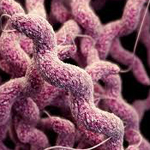
The genus Campylobacter is a group of zoonotic bacteria that cause diseases in animals and humans, although some are commensal in the intestinal tract of birds and ruminants [1].The genus has currently 34 species (as of 6 May 2021), and the most common Campylobacter species are C. jejuni and C. coli, which are associated with diarrheal disease in humans[2]. According to the Centers for Disease Control and Prevention, which monitors foodborne pathogens through the Foodborne Disease Surveillance Network, Campylobacter causes 1.5 million human infections in the USA each year[3], with most being caused by C. jejuni.
Campylobacteriosis is commonly acquired through the consumption of contaminated food derived from animals, consumption of other food products cross-contaminated from animal products, contact with infected animals, consumption of food products contaminated through soil or water containing animal waste, or consumption of contaminated water. Campylobacteriosis is often self-limiting with patients reporting symptoms of diarrhoea, cramping, abdominal pain and vomiting that typically last between 7 and 10 days.
The Campylobacter species cluster into five greater phylogenetic groups, with C. jejuni, C. coli, and C. upsaliensis belonging to the same group[4].The genus Campylobacter other species including C. lari, C. upsaliensis, C. concisus, and C. fetus may also cause campylobacteriosis. C. coli forms three distinct clades (I-III), colonizing different ecological niches. Isolates from clade I are generally associated with an agricultural origin, whereas isolates belonging to clade II or clade III can most likely be found in environmental sources like water. Recent recombination between strains from C. coli clade I and C. jejuni lead to the development of C. coli hybrid strains with substantial genomic introgression from C. jejuni[5].
Samples collection date:
Samples host information:
Serotype information:
Samples MLST information:
Samples phylogroup information:
Samples Virulence information:
Samples Resistance information:
[1] Sahin O, Yaeger M, Wu Z, et al. Campylobacter-Associated Diseases in Animals[J]. Annual Review of Animal Biosciences, 2017, 5(1): 21-42.
[2] García-Sánchez L, Melero B, Jaime I, et al. Biofilm formation, virulence and antimicrobial resistance of different Campylobacter jejuni isolates from a poultry slaughterhouse[J]. Food Microbiology, 2019, 83: 193-199.
[3] CDC. 2019 AR Threats Report[EB/OL]. (2024-2024.05.14https://www.cdc.gov/drugresistance/biggest-threats.html?CDC_AA_refVal=https%3A%2F%2Fwww.cdc.gov%2Fdrugresistance%2Fbiggest_threats.html.)
[4] Costa D, Iraola G. Pathogenomics of Emerging Campylobacter Species[J]. Clin Microbiol Rev, 2019, 32(4): 10.1128/microbiolspec.arba-0026-2017.
[5] Golz J C, Epping L, Knüver M T, et al. Whole genome sequencing reveals extended natural transformation in Campylobacter impacting diagnostics and the pathogens adaptive potential[J]. Sci Rep, 2020, 10(1): 3686.